Many years ago I had an idea for a series. Posit: a network of human-settled worlds, linked by wormholes, throughout the galaxy. For two worlds to be joined, a wormhole terminus has to be towed there at slower-than-light speeds in a starship, its crew (naturally) in suspended animation for a voyage that takes decades. Each terminus can only link to one other, at the starship’s last port of call. This has been happening for centuries, and human civilisation is now an interwoven web of many worlds and cultures. The frontier of the Expansion is all the worlds that so far have been settled through a wormhole, but have yet to send a starship on to the next world.
Then one day the network goes phut …
Rather, from the point of view of our heroes on a world at the end of one of the lines, their link to the last but one world goes phut. Maybe the whole network shut down, maybe it didn’t – they have no way of knowing (not for years and years, anyway) when they are forced again to rely on lightspeed communication. All they know is that their world is heavily dependent on supplies that come through the wormhole for terraforming, and will become uninhabitable within decades, so the only answer is to get into their ship for the slower-than-light journey back to the last world that will help them re-establish the link.
That would be Book 1.
Book 2, of course, they go on to the next world down the line, and the one after that, and … you get the picture. And other starships will be doing the same thing so sooner or later their paths will cross.
Series!
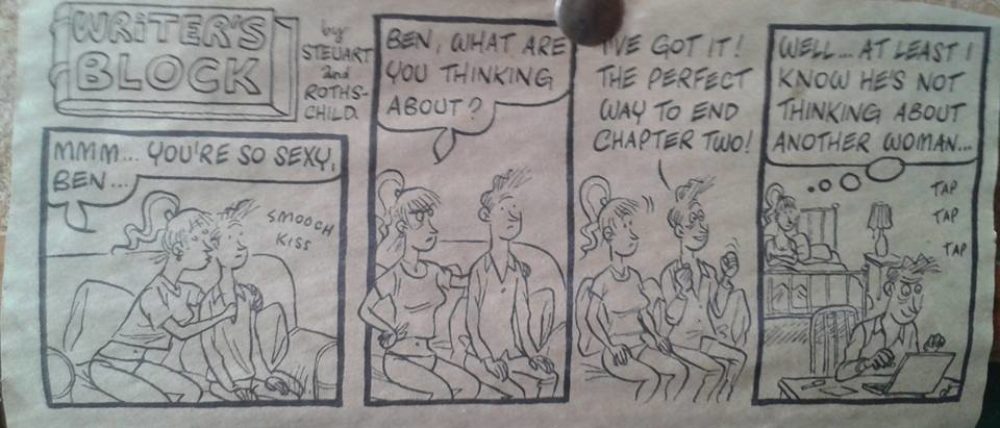
Then I sat down to write the puppy … And decided I really didn’t have time or energy for a series. But I could at least write one book. Meanwhile, I was busy getting married and ghostwriting and all that kind of thing, which on top of not feeling terribly inspired for an actual plot anyway led to a severe case of blockage. I persevered and hammered out a rough approximation of an epic space opera. But I was never really happy with it. I submitted it to my usual publisher, but withdrew it again.
Meanwhile it bubbled away at the back of my mind, and trusted friends were allowed a peek at the work. They all agreed it didn’t work, but their suggestions and my own bubbling led to resolutions. The galactic background that we never actually get to see was too complicated. The fact that it involved two worlds with no connection at all to Earth made it all too remote. And I was still handicapped by the thought that it might be a series so, Trek-like, I was pushing the reset button at the end to damn well make the characters do what I wanted rather than what the story said they should.
All this led eventually to a much simpler, streamlined and better novel. Just two worlds, Earth and its first extra-solar colony. Just one starship. Still a big phut. But being able to link this all back to Earth, even the Earth of a thousand years hence, meant much more emotional resonance and a far more satisfying read for the reader. And the characters do what the story wants them to, so it isn’t the contrived, series-friendly ending I was after.
Then I heard that Solaris was looking for Young Adult titles. I have never really thought of any of my science fiction as Young Adult, but the fact is that it how it has been published, so I sent it in. And then withdrew it, because I had something else to send them and the something else was the direction I wanted to go in.
And then, out of the blue a month ago, I got an email to say that the synopsis I had sent in was still somehow in circulation, and they really liked it, and would I be interested in placing it with Solaris as an adult novel?
A grown-up novel by a grown-up publisher, for the first time in my novel writing life. I thought about it for, oh, milliseconds.
And that, boys and girls, is how you will come to be able to read Phoenicia’s Worlds at some point, most likely in the summer, next year. Updates will be posted.
And yes, I am already thinking of a sequel.