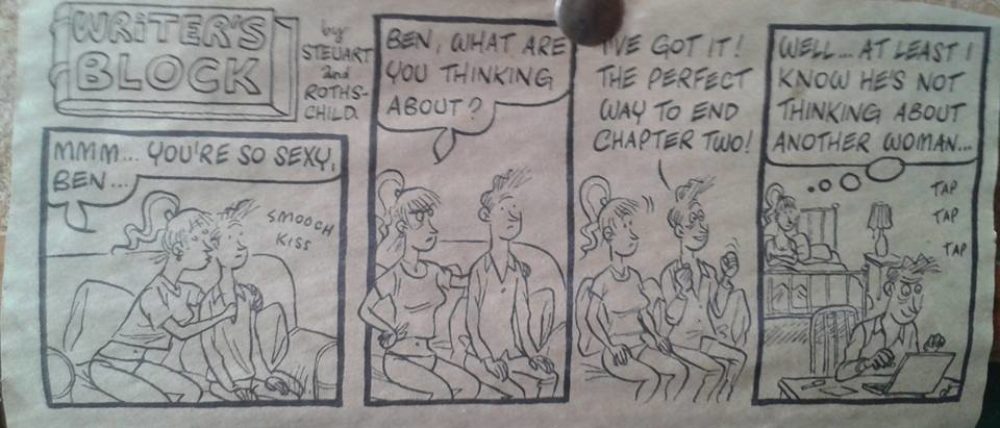
The boy stood on the burning deck

For many years I genuinely believed the poem began:

The boy stood on the burning deck
The ship was sinking fast.
And as he stood there sinking too
His captain floated past.

In fact it’s a little more Poetic than that. The poem – which, face it, just asks to be parodied – is “Casabianca” (not to be confused with the Bogart movie with a very similar but not quite identical name). The boy is the son of Captain Casabianca, captain of the French flagship Orient. The deck is burning because it’s the Battle of the Nile, and in a few short minutes the flames will reach Orient’s gunpowder stores and the ship will blow up quite spectacularly, killing the captain, the boy and most of the rest of the crew. True fact.

(The French fleet had moored bow-to-stern parallel to the shore, so that any enemy attack would have to be along one side only and they would have a reasonable chance of fighting off any aggressors. Nelson disgracefully worked out that there was space for some of his ships to sail between the line and the shore, so the French ships were attacked from both sides at once. Of such base, deceitful, unsporting treachery is one of the Royal Navy’s greatest victories made.)

The boy cries out during the poem to his father, asking to be relieved of his station, but his father is either already dead or at least unconscious. No order comes, the boy holds his station to the bitter end and *BOOM*. With a choke in its voice and a catch in its throat, the poem concludes:

There came a burst of thunder sound
The boyoh! where was he?
Ask of the winds that far around
With fragments strewed the sea!

With mast, and helm, and pennon fair,
That well had borne their part
But the noblest thing which perished there
Was that young faithful heart.

Hmm. Let us leave aside such unPoetic questions as: how does the poet, who wasn’t even there, know what the boy was doing? And, is that penultimate verse really meant to make you giggle?

Wikipedia tells me two useful things. One is Samuel Butler’s thoughts on the poem:

“the moral of the poem was that young people cannot begin too soon to exercise discretion in the obedience they pay to their papa and mamma.”

The other is that, during the action, the boy’s leg was apparently blown off. All of a sudden another possible explanation for his immobility becomes apparent.

The boy lay on the burning deck
His other leg lay near …

I’m probably missing the point entirely.

Fancy the contents of a Swedish farmhouse?

With my father-in-law safely installed in a home for retired Vikings, the contents of the farm are being auctioned off. If you have a krona or two to spare (exchange rate 10.44 to the pound, according to the Post Office a fortnight ago) and are so inclined, the goods are available to view.

Some particular items to draw your attention to:

How much do I have to pay for this not to be delivered to my front door?

Handy for the shopping

Those were the days

Want!

Keep calm and ex-term-in-ate!

We have a crisis in the time-space continuum. Daleks just aren’t scary any more, and apparently not even the Moffat Magic can make them so.

Or maybe it can, it just chooses not to. Whatever the facts, Moffat Daleks have inherited the biggest flaw of RTD Daleks, which is that they only exterminate the unimportant people, for no other reason than Plot.

In days of yore, the Daleks were frightening in part because all the actors acted as if they were frightening. Especially the Doctor, because he had seen their bad side once or twice before. We the viewers knew they were touchy inferiority-complex ridden psychopaths with hair-trigger death rays and we held our breath whenever it looked like one of them might get more than slightly grumpy, because we knew someone was going to get it.

Almost always, the Doctor sidled into their foul schemes undetected: they had invaded or annexed somewhere for their own nefarious purposes, often making an alliance of convenience with the worst examples of humanity which would all end in over-exposed negative-effect tears, that being the best effect the Beeb had in those days for death rays. Somewhere along the way there would be a slightly potty scientist who begrudgingly, reluctantly came over to the Doc’s side and probably paid for it with his life.

Of all the New Who adventures to date, Victory of the Daleks really was the one that would have benefited most from the old school 4-part, 25 mins each treatment. It bore a strong resemblance in places to Power of the Daleks, an adventure sadly lost to the video archives but still available in audio format (which is how I first heard it), and could have learned from it. In that one the Daleks also ingratiate themselves into human affairs, aided by the worst examples of humanity for the latter’s political reasons, and of course it all ends in over-exposed negative-effect tears. With Victory of the Daleks in old-school format, the Doc would take at least two episodes to establish his good guy credentials, with even (or perhaps especially) a highly sceptical W. Churchill ranged against him while all around him strange things were happening that the powers that be just didn’t get. He would have been incarcerated at least twice. Those two eps would also have been used to establish the spin-off Dalek tech also in use by the British during WW2. And there would be extermination, left, right and centre. It would start slowly, mysterious death by mysterious death, with victims gradually increasing in importance.

Maybe the cliffhanger at the end of part 2 would have been the veil of niceness being withdrawnand the pepperpots revealing their true colours, about to zap the Doctor. Though to be honest it could have been spun out to the end of part 3. Instead of zapping two extras, as shown, the Daleks would turn their guns on the entire British high command, Churchill included, and it’s in saving them that the Doctor proves his point.

Part 4 could go pretty well as the rest of last night went, except that if the Doctor simply had to have a long talk with them, he could do so from within the safety of the TARDIS forcefield.

And the potty scientist would have paid for it all with his life.
Let’s not do it down entirely. There were some good lines and an especially good portrayal of old Winston. The new Daleks look funky and hopefully will revert from now on to suitably Dalek-like behaviour. Indeed, the whole concept of WW2 Daleks in olive green, offering cups of tea, was wonderful. It’s shame it was dispensed with in the first ten minutes.
It’s also a shame we never got to see the answer to the biggest question of all, which is how exactly does a Dalek take stuff out of the webbing pockets around its waist? The most logical solution is that they pair up and take stuff out of each other’s pockets, which is a bit too like a party game to be all that serious.
  • Update: see here for unkind but funny speculation about the nu-Daleks.